
A European BBQ can draw on regional traditions while keeping the relaxed spirit of an Aussie gathering. From Florentine T-bone steak to ćevapi and their accompaniments, each favourite brings its own flavours and character to the table.
Planning a feast? Start by choosing a regional dish, then think about the sides and flavours that suit it. This guide explores Florentine steak, factors that can affect ćevapi prices, and accompaniments that bring a meal together. It also looks at how European BBQ traditions vary by region, with ideas for a smoky, generous shared meal.
Key Takeaways
- Recognise how local traditions shape the grill, from Florentine T-bone steak to mussels cooked over pine needles in Bordeaux.
- Explore the range of meat and seafood used in regional BBQs, including lamb, chicken, red mullet, squid and whitebait in Santorini.
- Discover how marinades, rubs and sauces can bring distinctive flavour to grilled dishes.
- See how European and Aussie BBQ menu options can help set the tone for a relaxed, shared feast.
3. How do European BBQ traditions differ by country?
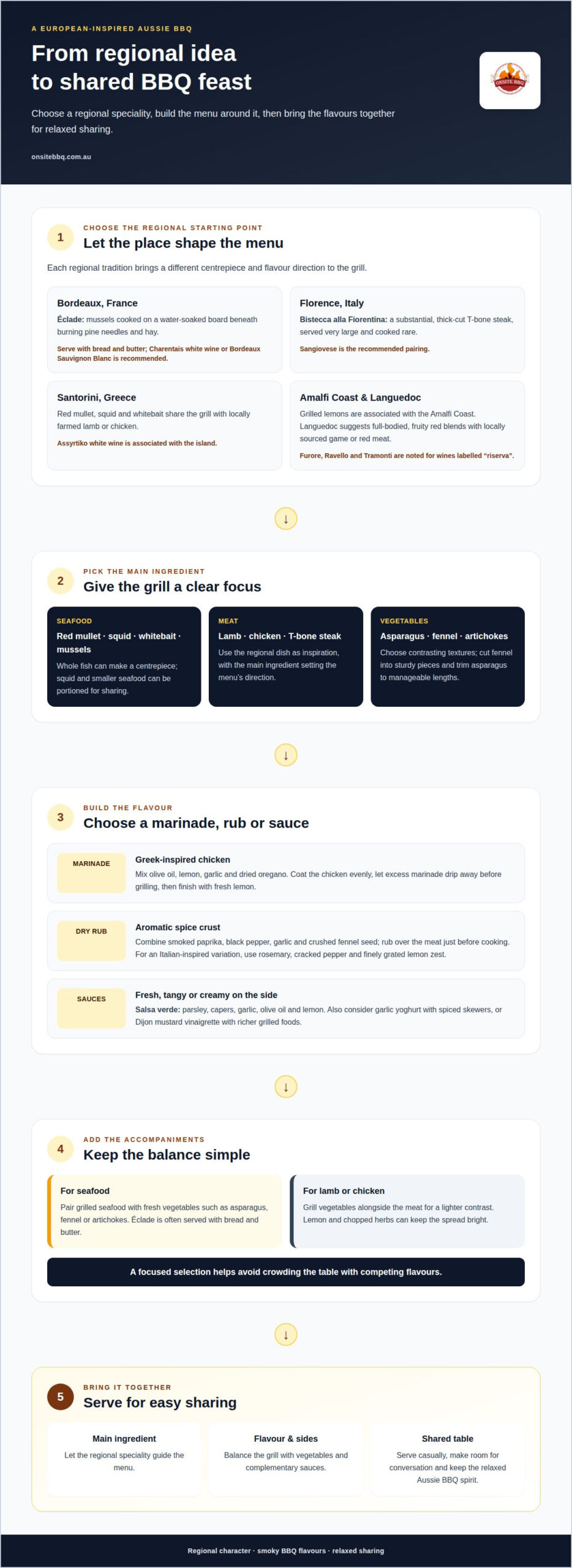
Regional cooking gives a European BBQ its distinctive character. In Bordeaux, France, éclade is a beach barbecue in which mussels cook on a water-soaked board beneath burning pine needles and hay. Bread and butter are often served alongside, and a Charentais white wine or Bordeaux Sauvignon Blanc is recommended with the mussels.
In Florence, Italy, bistecca alla Fiorentina is a substantial T-bone steak, usually cut thick, served very large and cooked rare. Sangiovese is a recommended pairing, reflecting the local wine tradition. In this European BBQ style, the steak takes centre stage.
Santorini brings a different mix to the grill: red mullet, squid and whitebait, alongside locally farmed lamb or chicken. Assyrtiko white wine is also associated with the island. The ingredients show how local seafood and farming shape the menu.
Along Italy’s Amalfi Coast, grilled lemons are a regional food association. Wines labelled “riserva” from Furore, Ravello and Tramonti are noted for their quality. In France’s Languedoc region, full-bodied, fruity red blends are suggested with locally sourced game or red meat. For an Aussie BBQ inspired by these traditions, choose a regional speciality and match the sides and drinks to its flavours. This gives the menu a clear theme while keeping the relaxed, shared feel of an Australian gathering.
Éclade from the Bordeaux region is often served with bread and butter. To take inspiration from this pairing, keep the accompaniments simple and let the mussels remain the focus. Serve bread and butter alongside, giving guests an easy way to enjoy the dish. This also works well for a shared barbecue: serve casually, make room for conversation and let the regional speciality guide the rest of the menu.
3. What meat, seafood and vegetables are commonly used in European BBQ?
European BBQ menus vary by region and main ingredient. In Santorini, grilled red mullet, squid and whitebait bring seafood to the table, while locally farmed lamb or chicken offers another option for the grill. The contrast runs from delicate fish to hearty meat, creating variety in flavour and texture.
For an Australian gathering, use regional dishes as inspiration rather than treating them as a fixed menu. Pair grilled seafood with colourful, fresh vegetables such as asparagus, fennel or artichokes. Lamb and chicken work well with vegetables grilled alongside them. A focused selection makes a generous spread without crowding the table with competing flavours.
Think about how each ingredient will be served. Whole fish makes a centrepiece, while squid and smaller seafood can be portioned for sharing. Cut fennel into sturdy pieces for the grill and trim asparagus to manageable lengths. Serve grilled vegetables with lamb or chicken for a lighter contrast. These details help an Aussie BBQ feel varied and inviting.
Build your European BBQ menu around a clear balance: choose a main ingredient, add vegetables with contrasting texture, then serve everything together for easy sharing. A European BBQ-inspired spread can bring regional character to a local gathering without making the menu feel complicated. Explore European-inspired BBQ flavours for ideas to shape your next feast.
3. What are traditional European BBQ marinades, rubs and sauces?
For a Greek-inspired BBQ, mix olive oil, lemon, garlic and dried oregano into a marinade for chicken. Coat the meat evenly, then let excess marinade drip away before grilling. A squeeze of fresh lemon when serving can brighten the finished dish.
A dry rub creates a more concentrated crust on grilled meat. Combine smoked paprika, black pepper, garlic and crushed fennel seed for a warm, aromatic blend, then rub it over the surface just before cooking so the spices cling. For an Italian-inspired variation, use rosemary, cracked pepper and finely grated lemon zest.
Sauces add freshness after cooking. Italian salsa verde combines chopped parsley, capers, garlic, olive oil and lemon for a lively, herb-packed finish. Spoon it over grilled meat at the table instead of coating every piece in advance. This keeps its fresh, sharp flavour distinct from the grill’s smokiness.
For a creamy option, serve garlic yoghurt alongside spiced skewers. A simple Dijon mustard vinaigrette brings tang to richer grilled foods, while lemon and chopped herbs keep the overall spread bright. Offer sauces in separate bowls, so guests can choose how much they want. Build an Aussie BBQ menu around one marinade, one dry rub and contrasting sauces for an easy mix of flavours. Plan a BBQ feast with distinctive European-inspired flavours.
OnSite BBQ & Catering: European BBQ
OnSite BBQ & Catering brings European-style BBQ flavours to functions across Greater Sydney, with live onsite charcoal grilling and a feast designed for sharing. It suits gatherings that call for regional inspiration and the smoky appeal of a BBQ, with the team handling setup, cooking, serving and clean-up.
Choose a European-style BBQ menu, or pair it with the Middle Eastern BBQ experience, Traditional Australian BBQ or Hot breakfast BBQ. OnSite BBQ & Catering cooks live onsite, making it easier to shape the food around your gathering, whether you want familiar BBQ favourites or a menu with broader flavours.
Live cooking adds aroma and atmosphere as guests gather around the meal. You can focus on welcoming everyone while the food becomes part of the occasion. Contact OnSite BBQ & Catering to discuss European BBQ for your function.
Make your next gathering one to remember
Give your function a distinctive flavour by choosing a menu that suits the atmosphere you want to create. A European-style BBQ feast can set a relaxed, celebratory tone, with live charcoal cooking bringing guests together around the food. Start by deciding on the kind of gathering, then choose a menu direction that fits your guests.
OnSite BBQ & Catering offers a Lebanese BBQ Menu, Lebanese BBQ Catering and an Aussie BBQ Menu, giving you different ways to shape the occasion. Whether you’re planning a lively family gathering or a work function, a well-chosen BBQ menu helps make the food part of the experience, not another task on your list. Contact OnSite BBQ & Catering to start planning a feast that brings everyone together.
Frequently Asked Questions
What does European BBQ mean?
European BBQ describes a broad range of regional grilling traditions, not one standard recipe or menu. For an Australian gathering, think of it as a way to bring a particular place’s flavours to the grill. Naming a region or dish makes the menu clearer, especially when guests have different expectations of European BBQ.
What are popular European barbecue styles and dishes?
Regional examples include France’s mussel-based éclade, Italy’s Florentine T-bone and grilled seafood associated with Santorini. For a shared meal, choose one dish as the centrepiece, then build the menu around its character. A robust steak calls for different accompaniments from delicate seafood, so let the main dish guide your choices.
How do you set up a European-style BBQ at home?
Choose a regional style and centre the menu on one dish, such as Florentine steak, éclade or Santorini seafood. Add vegetables for contrast and serve sauces separately so guests can choose how much to add.