The barbecue with the deepest smoky flavour isn’t always the easiest to cook on. If you love food with a fire-kissed edge, charcoal BBQs can be the best-tasting choice, while gas and electric BBQs suit cooks who value convenience and control.
Each option brings something different to the table. The best fit depends on the flavour you want and how you like to cook. This guide compares charcoal, gas and electric BBQs to help you choose.
We’ll look at what shapes the flavour, how cooking time and convenience differ, and what to consider when choosing a gas or charcoal barbecue for your Sydney gatherings.
Key Takeaways
- Learn what creates charcoal’s distinctive flavour, and how it differs from the taste of gas- and electric-cooked food.
- Choose a BBQ based on the cooking experience you want, from hands-on heat control to simpler start-up.
- Allow for charcoal’s longer heat-up time when planning your cooking and serving schedule.
- Match your BBQ choice to the occasion, so you can balance flavour, convenience and the number of people you’re feeding.
Charcoal flavour compared with gas and electric
Charcoal, gas and electric grills each shape flavour differently. The best choice depends on the taste you want and how you cook outdoors.
Charcoal flavour
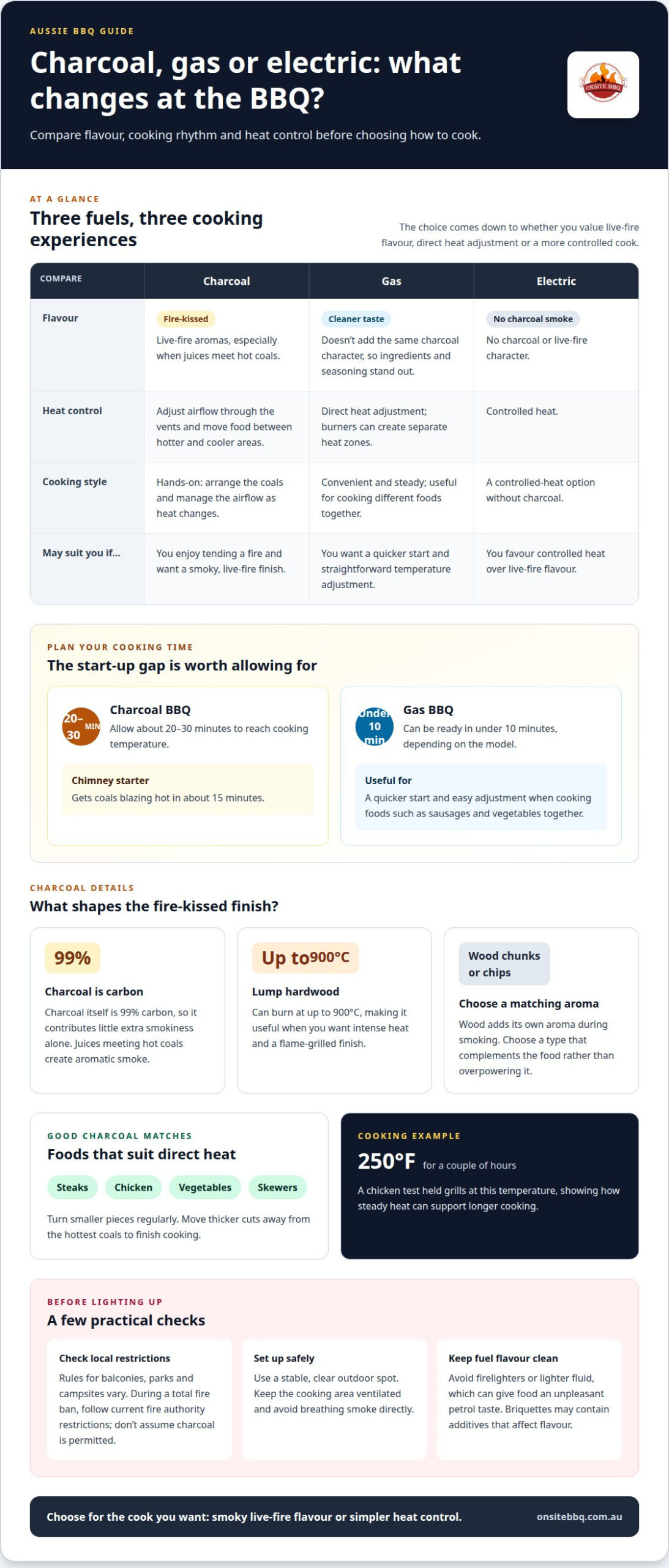
A charcoal grill gives food a fire-kissed flavour, especially when juices meet hot coals and create aromatic smoke. Charcoal itself is 99% carbon, so it contributes little extra smokiness alone. Gas offers cleaner, steadier heat, while electric cooking adds no charcoal or live-fire character. In a backyard or camping setting, charcoal brings the cooking fire into the experience.
Charcoal and wood types
Lump hardwood charcoal burns at up to 900°C, making it a useful choice when you want intense heat and a flame-grilled finish. Wood chunks or chips add their own aroma during smoking; choose a type that complements the food rather than overpowering it. Fuel and BBQ costs vary with the grill’s size and construction, plus the type and amount of charcoal or wood you use.
Charcoal heat and temperature control
Allow about 20-30 minutes for a charcoal BBQ to reach cooking temperature. A chimney starter can get coals blazing hot in about 15 minutes; newspaper can help light it. Control temperature by adjusting airflow through the vents and moving food between hotter and cooler areas. For fire safety, use a stable, clear outdoor spot. During total fire bans, follow current fire authority restrictions and don’t assume charcoal is permitted.
Foods cooked over charcoal
Steaks, chicken, vegetables and skewers suit charcoal’s direct heat and smoky edge. A chicken test held grills at 250°F for a couple of hours, showing how steady heat can support longer cooking. Turn smaller pieces regularly and move thicker cuts away from the hottest coals to finish cooking. Gas and electric grills can suit cooks who favour simpler heat control over live-fire flavour.
| Option | Flavour | Cooking style |
|---|---|---|
| Charcoal | Fire-kissed | Hands-on |
| Gas | Cleaner, steady | Convenient |
| Electric | No charcoal smoke | Controlled heat |
Choose charcoal for live-fire flavour, or gas and electric for easier heat control.
Choosing a gas or charcoal barbecue
Choose by flavour, cooking habits and where you’ll use the BBQ. Gas suits consistent heat and quick meals; charcoal suits cooks who enjoy tending the fire. Gas BBQs commonly use multiple burner sets, creating separate heat zones for foods such as sausages and vegetables.
For a portable BBQ, consider how often you’ll move it and what you’ll cook. Portable charcoal models suit camping and smaller outdoor meals, while a larger BBQ offers more room for shared backyard cooking. Factor in the cost of the barbecue, fuel and accessories such as a chimney starter.
Fuel changes the result, too. Lumpwood can reach up to 900°C, while briquettes may contain additives that affect flavour. Choose charcoal for the cooking style: larger lumpwood suits slow cooking, while smaller pieces can be easier to manage for shorter sessions. Gas makes temperature adjustment more direct; charcoal offers the ability to build distinct hot and cooler areas.
Rules for balconies, parks and campsites depend on the building, land manager and current fire restrictions, so charcoal isn’t permitted everywhere. During a total fire ban, follow the applicable local restrictions rather than assuming a portable BBQ is allowed.
Smoke can irritate airways, so avoid breathing it directly and keep the cooking area ventilated. To reduce heavily charred portions, move food away from flames and remove burnt spots before serving.
To choose, weigh flavour against convenience: pick gas for consistent, adjustable heat, or charcoal for live-fire cooking and smoky character.
How do charcoal and gas barbecues compare for flavour, cooking time, and convenience?
Both BBQs can make a backyard meal feel like a feast, but they suit different cooking rhythms. Gas can be ready in under 10 minutes, depending on the model. Charcoal takes longer, so plan the lighting before guests arrive. If you reckon charcoal BBQs are the best-tasting choice, that extra preparation may be part of the pleasure.
Charcoal gives you a hands-on cook. Arrange the coals, then manage airflow as the heat changes. A chimney starter takes about 15 minutes to get coals blazing hot. Gas burners offer more direct adjustment, which helps when cooking sausages and vegetables together.
Flavour is another deciding factor. Charcoal brings live-fire aromas, especially when food juices meet hot coals. Gas doesn’t add the same charcoal character, allowing ingredients and seasoning to stand out. Neither BBQ is automatically better. Consider whether smoky flavour or simpler temperature control matters more to you.
For a relaxed weekend lunch, charcoal suits cooks happy to tend the fire while steaks and vegetables sizzle. For a quick weeknight meal, gas can be more convenient. If charcoal BBQs are the best-tasting choice for your gathering, allow time for the fire and enjoy cooking as part of the occasion.
Use this simple decision guide:
- Choose charcoal for live-fire cooking and a smoky finish.
- Choose gas for a quicker start and easy heat adjustment.
For a shared meal centred on live-fire cooking, plan a charcoal BBQ feast.
Gas barbecues provide heat from 2-3 sets of burners. Briquettes may contain additives that can impart an unpleasant chemical flavour to food. Avoid firelighters or lighter fluid: they can give food an unpleasant petrol taste.
OnSite BBQ & Catering: charcoal bbq catering
OnSite BBQ & Catering provides live charcoal BBQ catering for gatherings where smoky, fire-cooked food is part of the occasion. It’s a natural fit when you want guests to enjoy a BBQ feast without managing the cooking yourself.
Choose from the Lebanese BBQ Menu, Aussie BBQ Menu or Burger Bar Menu to suit the style of your event. The live BBQ adds the aroma and activity of cooking to the gathering, while you spend more time with your guests. If you’re planning a function and want charcoal flavour on the menu, this catering option brings the cooking experience to your event.
Contact OnSite BBQ & Catering to discuss charcoal BBQ catering for your gathering.
Plan a BBQ gathering worth sharing
If you reckon charcoal BBQs are the best-tasting choice, make that flavour part of the occasion. Consider the gathering you’re planning and the menu that will suit it. A shared feast can bring people together over delicious food and time outdoors.
OnSite BBQ & Catering offers a Lebanese BBQ Menu, Lebanese BBQ Catering and an Aussie BBQ Menu. These options are a starting point for shaping a BBQ gathering around the food you’d like to share with guests.
Ready to plan your next event? Contact OnSite BBQ & Catering to discuss your BBQ catering. Choose the flavours that feel right for your occasion, and look forward to a gathering filled with good food and great company.
Frequently Asked Questions
Which barbecue should I buy, gas or charcoal?
Choose gas if straightforward heat adjustment matters most, or charcoal if you prefer live-fire cooking and its distinctive flavour. Think about the meals you cook most often: gas suits quick dinners after work, while charcoal can make weekend cooking part of the gathering. The best choice is the one that fits your routine.
Why do charcoal barbecues give food a smoky, distinctive flavour?
Smoke and flame create aromas that can cling to food as it cooks. Dripping fat and marinade can also meet hot coals, adding another layer of savoury aroma. The result depends on the fuel, food and distance from the heat, giving charcoal cooking a character distinct from gas.
Do blind taste tests show charcoal BBQ food tastes better than gas BBQ food?
Blind tests can show which sample a group prefers under the conditions tested, but they don’t establish one barbecue as universally better tasting. Results can vary with the cut of meat, seasoning, cooking method and tasters’ preferences. For a fair comparison, serve the same food with matching seasoning and doneness, without revealing which grill cooked it.